How Quantavist is rethinking the visibility layer in construction
This article summarises the key ideas from the recent webinar, focusing on the core points of the discussion.
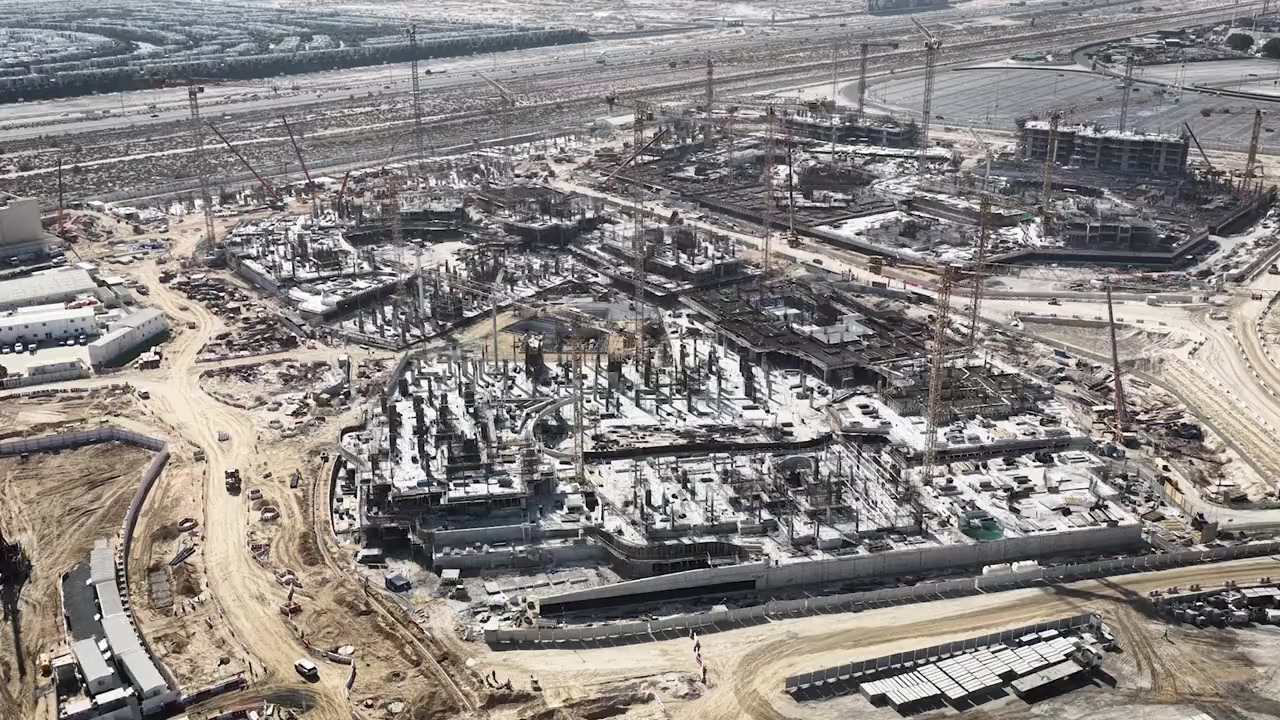
Quantavist co-founders Jordan Kettle and Oscar Pickerill recently sat down to discuss visibility, the foundational pillar of the system. Their conversation explores the sheer volume of unseen activity on site, why traditional CCTV safety systems fall short and the strict criteria Quantavist set when designing an alternative.
The underlying problem
Unlike static environments like factory floors, construction sites are dynamic and unpredictable. The layout, hazards, workforce and access routes change day to day or even hour to hour. Because of this, the significance of any given condition depends heavily on the time and the place of its observation.
Reporting and analytics have become increasingly digitised over the past decade, yet the observation layer itself has barely changed. Hazardous conditions regularly develop in the gaps between scheduled site inspections and if nobody is there to observe them, no data is produced at all. When an unobserved risk inevitably turns into an incident, post-incident reporting cannot undo the damage. It simply logs a failure that better observation should have prevented.
Limitations of the current market
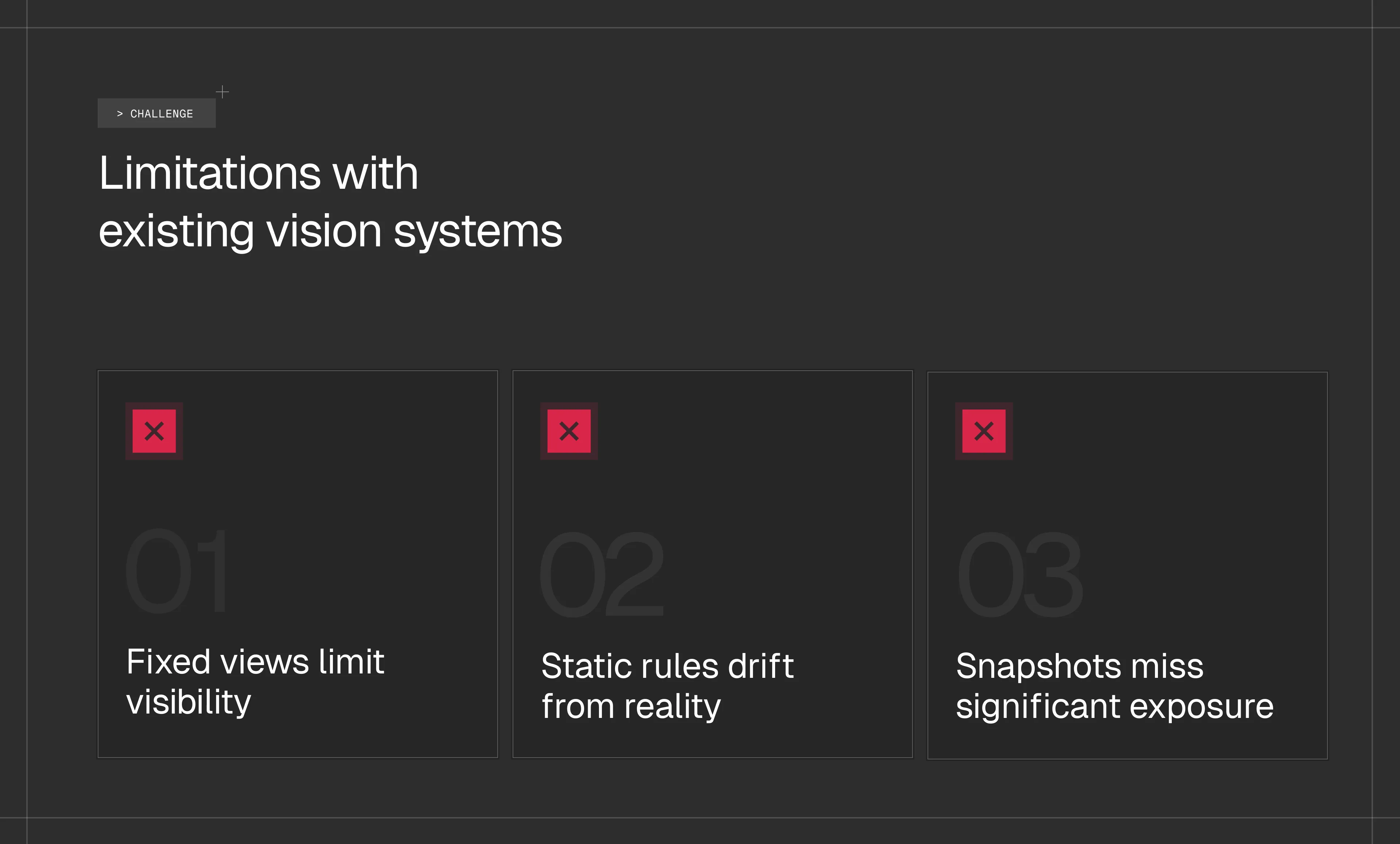
Several vendors have brought computer vision products into construction to improve safety monitoring. However, many of these systems rely on design assumptions inherited from static environments, often selling an illusion of coverage rather than actually improving visibility. Most available options fall into one of three recurring limitations.
1. Fixed positioning
Most AI cameras rely on static mounting, meaning a hazard must happen within a fixed field of view to be captured. Getting comprehensive coverage requires a huge number of cameras, most of which spend their operating time watching unoccupied space while the work moves elsewhere. Installation costs scale with camera count, but the actual value does not.
2. Fixed rule configuration
Systems built on manually drawn zones need constant reconfiguration to stay accurate as the project evolves. This might work in a static indoor setting, but it quickly fails at the scale and pace of a major construction project. It actually doubles the effort required by a HSE team, often forcing them to update settings on the software at the same time as their normal daily work.
3. Single frame analysis
Most systems assess a single snapshot rather than a sequence unfolding over time. A worker briefly adjusting a hard hat triggers the same detection as someone working without one for an hour beneath an active load. Without understanding temporal context, these systems mistake momentary appearances for significant risk and significant risk for momentary appearances, frequently flooding HSE teams with noise while missing sustained hazards.
Criteria for an autonomous system
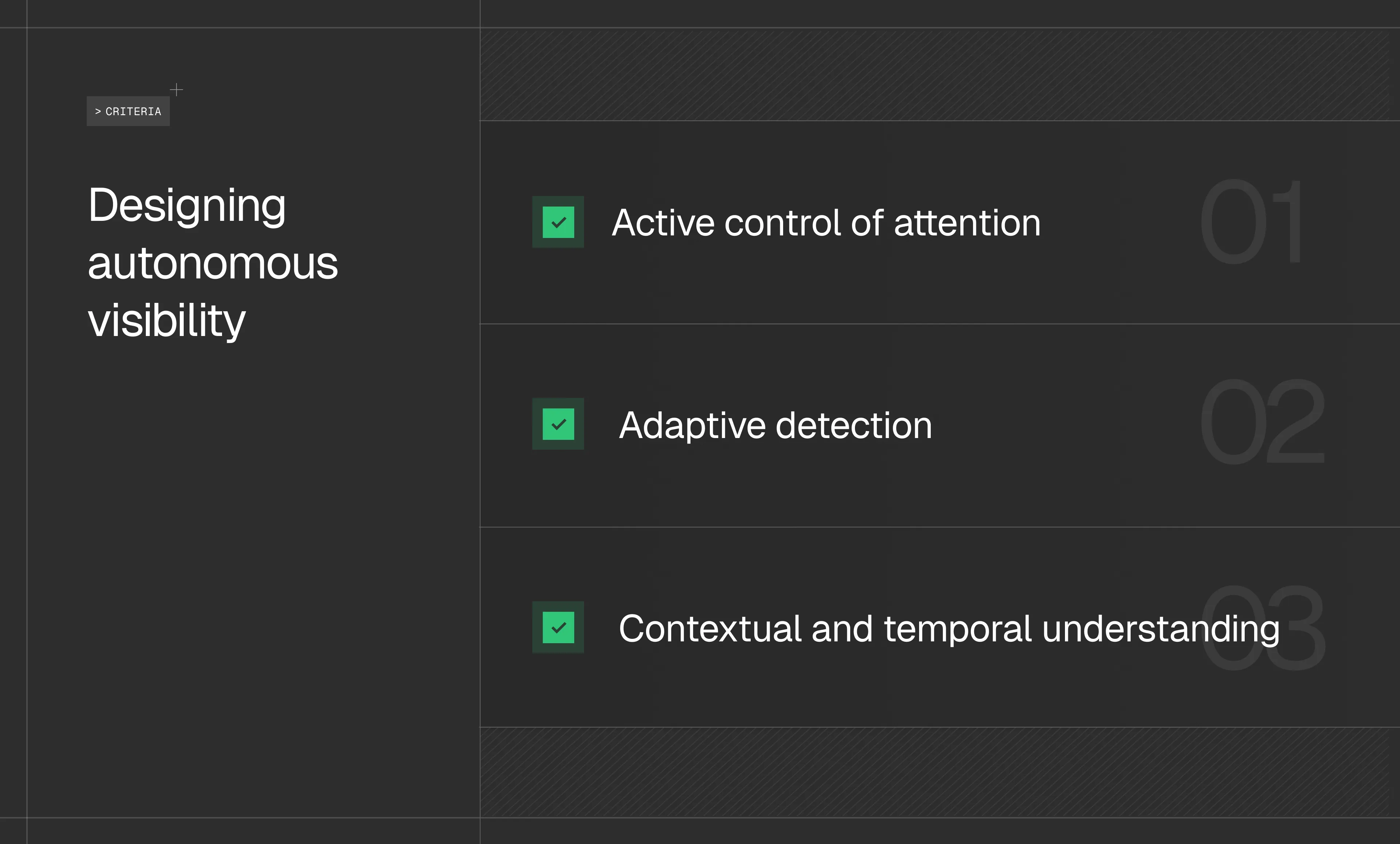
Recognising where existing systems fall short, Quantavist approached its system design from a different starting point. Creating a genuine alternative meant satisfying three requirements simultaneously, with each directly targeting one of the key limitations in the market.
1. Active control of attention
A system suited to this environment starts by controlling where it looks. Rather than relying on a static network and waiting for something relevant to enter the frame, it has the agency to allocate this attention with a drone, humanoid robot or a camera capable of 360 motion and optical zooming.
2. Adaptive analysis
After determining where to look, the system must decide what to look for. It tunes its analysis to the specific location, activity and project stage rather than trying to detect everything at once. Workers placing formwork at height carry a materially different risk profile from workers tying rebar, so a single view needs to support shifting priorities depending on the work taking place.
3. Contextual understanding
Detections must be evaluated in relation to one another and over time rather than in isolation. This allows a brief condition to be distinguished from sustained or developing exposure. It is an attempt to replicate the judgement an experienced safety manager would apply on site rather than simply classifying objects in a frame.
Value delivered by the Quantavist system
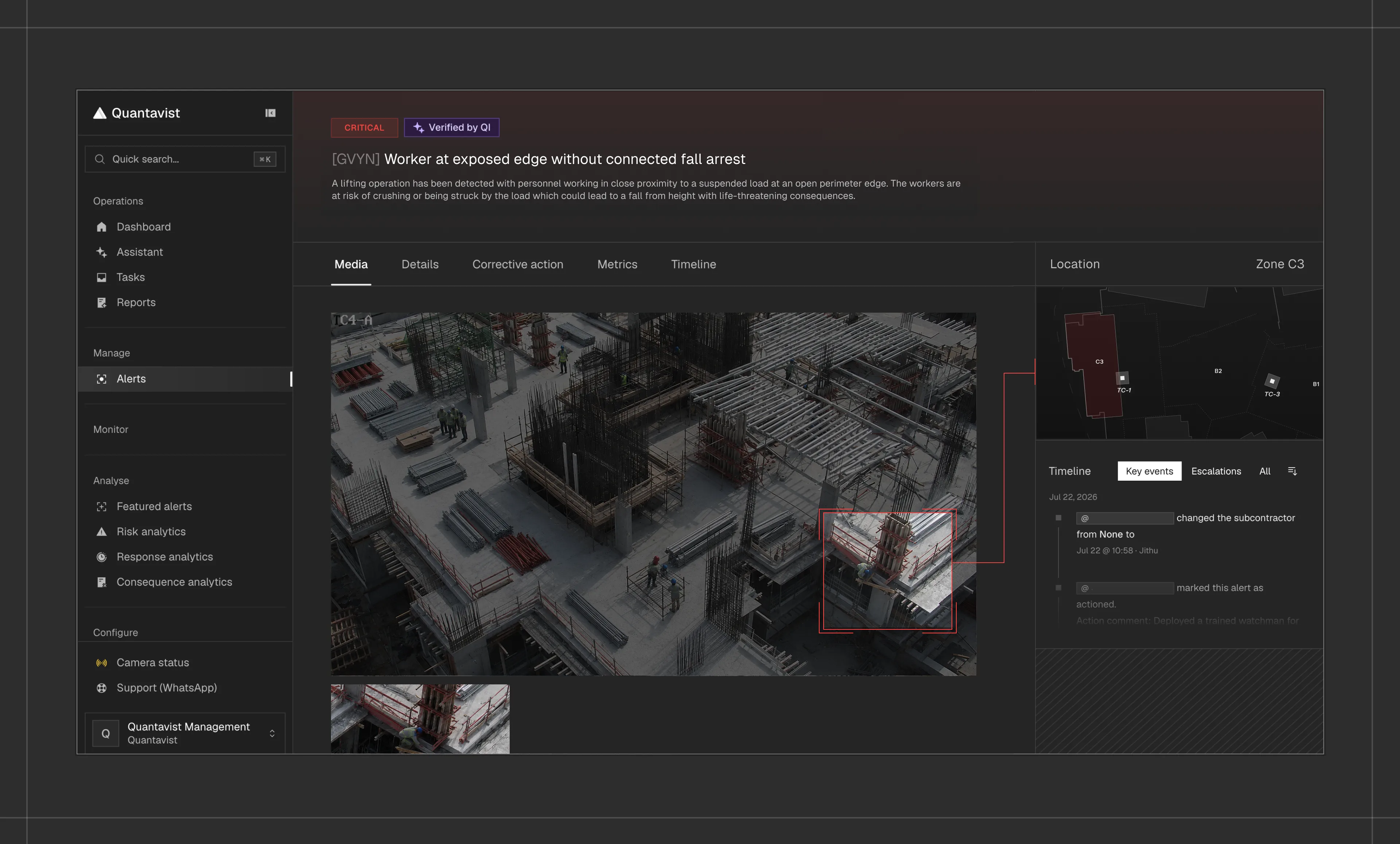
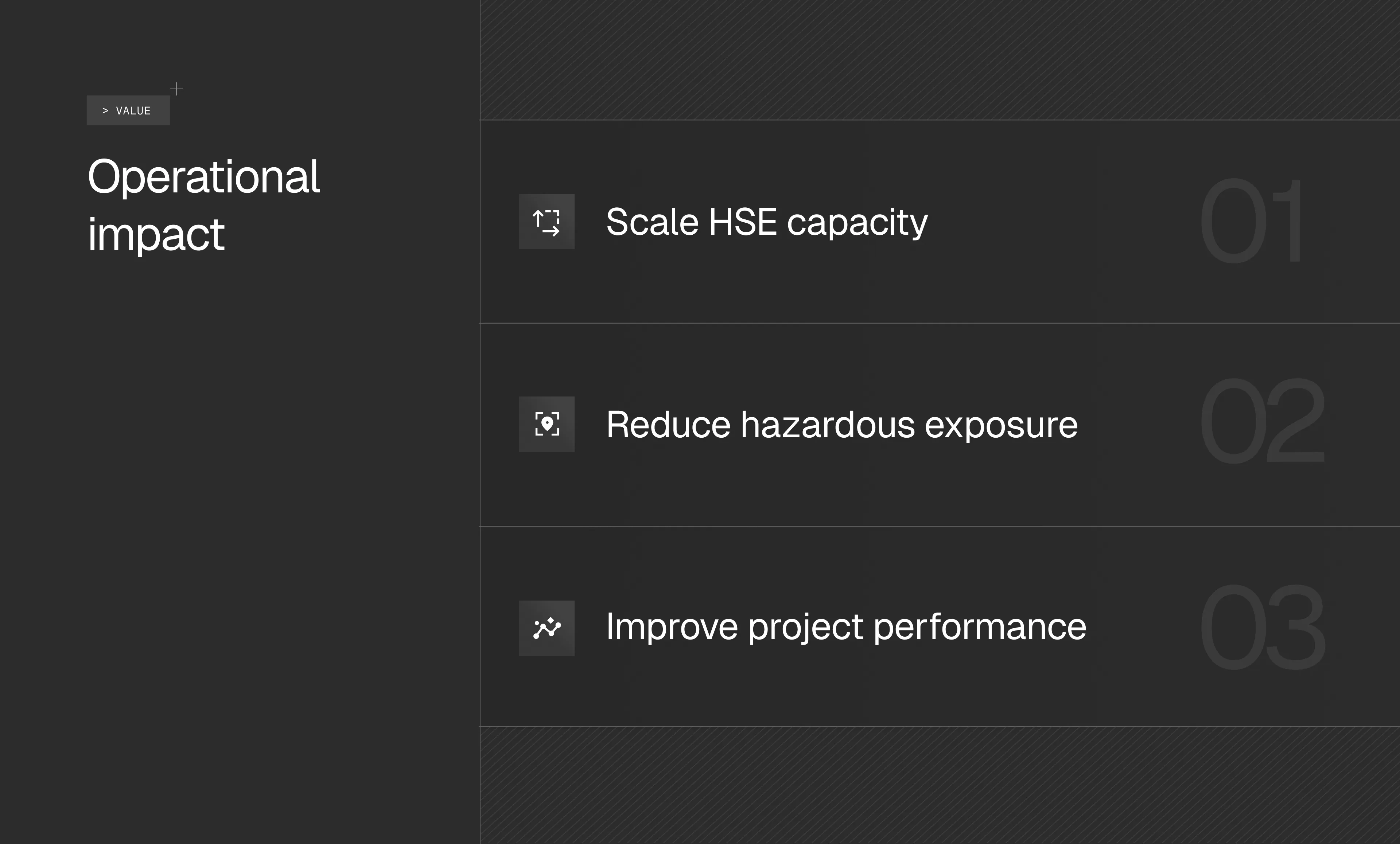
By meeting all three criteria, the Quantavist system delivers value that extends well beyond simply catching more incidents on camera, actively exposing systemic site risks that traditional management routinely accepts. Together, these capabilities produce tangible benefits across three distinct areas.
1. Extending HSE capacity
A clean inspection from a Thursday afternoon site walk says little about conditions at one o'clock in the morning the following day. Night shifts lose safety coverage disproportionately to the workforce they lose, meaning exposure per hour worked often rises. Continuous monitoring with the Quantavist system extends what a reduced overnight team can see during the hours when the fewest people are present to intervene.
2. Reducing hazardous exposure
This value is best understood through the familiar exercise of reviewing site footage after a serious incident and identifying where controls had visibly weakened beforehand. Hindsight makes those warning signs obvious, but it arrives too late. Quantavist provides continuous visibility to surface those same indicators while the project is still live and there is still time to act.
3. Improving project performance
In vertical construction where work sequences repeat from floor to floor, lessons learned on one level carry directly into the next. This includes anticipating recurring congestion, predictable control failures and gaps in supervision. Quantavist feeds this rich data into logistics, supervision and operational planning to highlight both successes and hidden operational friction.
Towards autonomous risk interception
Visibility is the foundational layer supporting whichever autonomous asset carries out the observation work, whether that is a robotic camera, an aerial drone or a humanoid robot. Establishing this bedrock layer gives the Quantavist system a commanding operational advantage across its other three pillars of workflows, analytics and intelligence.
To find out more about how the Quantavist system can transform visibility on a project, readers can get in touch through the Partner with Quantavist form on the website.